
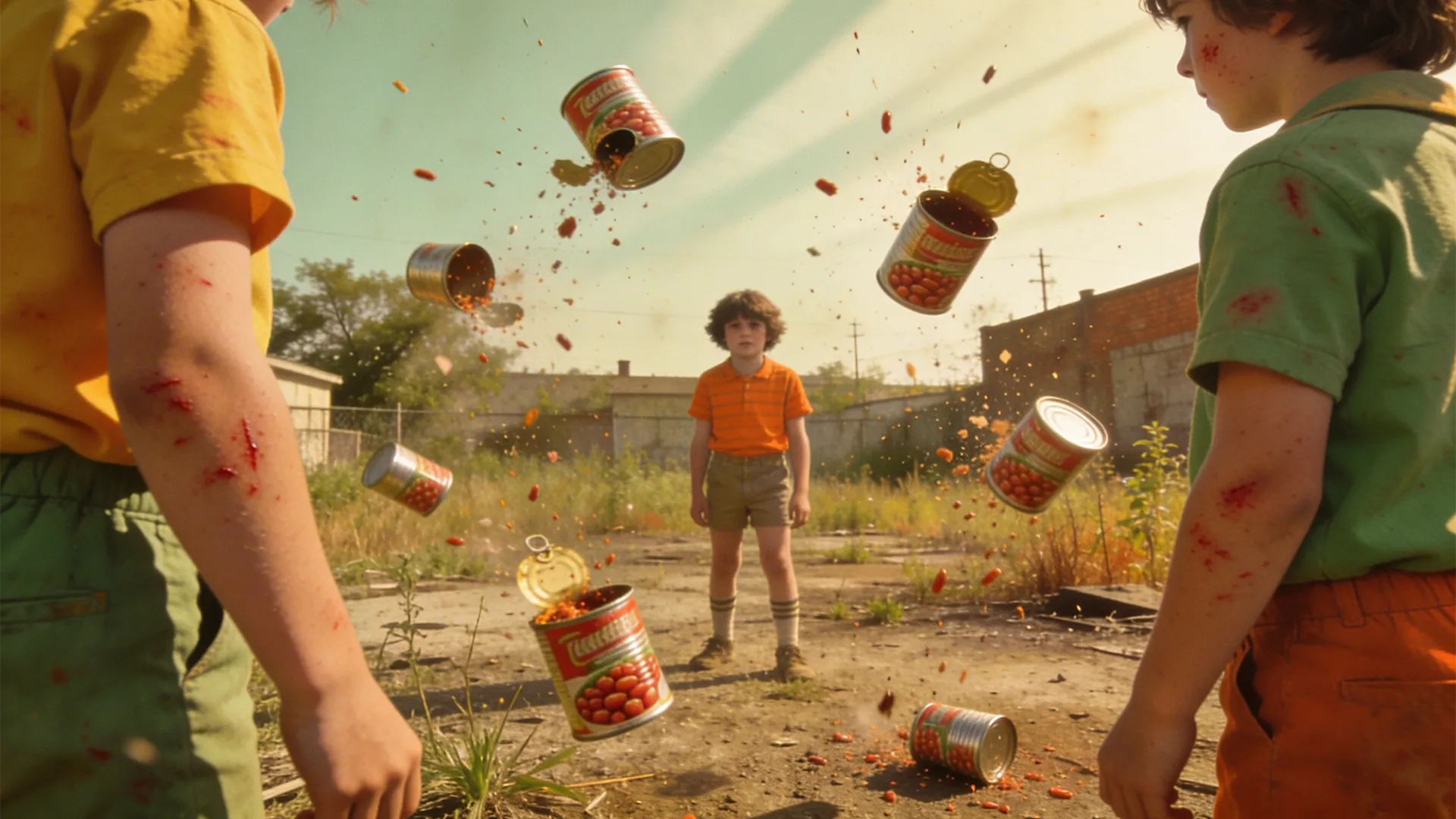
There was a time when boys could nearly blow up a summer camp and still grow up to be responsible adults. It was not because the behavior was wise. It was because childhood itself looked very different.
Before every scraped knee required a form, before every prank required counseling, there was a generation of kids who learned by doing, failing, and sometimes detonating canned goods in the process.
When Summer Camp Turned Into a War Zone
Picture a group of city boys shipped off to a rustic summer camp by well meaning adults who wanted to keep them out of trouble. The goal was simple. Fresh air, canoe rides, campfire songs, and character building. What could go wrong.
Quite a bit, as it turns out.
Give a handful of restless boys access to a campfire and a stash of canned food and someone will eventually wonder what happens when you throw unopened beans into the flames. The answer is loud, messy, and unforgettable. Exploding cans at midnight have a way of transforming a peaceful campground into something that feels like a battlefield.
On paper, it looks like pure mischief. In hindsight, it also looks like a rite of passage. The chaos revealed something about boyhood. Curiosity mixed with poor judgment. Courage mixed with immaturity. Loyalty among friends that outweighed common sense.
No one left that camp unchanged. The adults learned they had underestimated the imagination of young boys. The boys learned that consequences are real and that beans under pressure will eventually explode.
Discipline Meant Something Different
In earlier generations, discipline was not a debate. It was a certainty.
If you embarrassed your parents, damaged property, or got sent home from camp, you knew what awaited you. There were no family summits to unpack your feelings. There were no lengthy psychological profiles to determine the root cause of your rebellion. There was authority. There were consequences.
That does not mean everything was perfect. It does mean that boundaries were clear.
Fathers did not worry about being liked. Mothers did not hesitate to correct their children in public. Community leaders stepped in when needed. The message was simple. Actions have outcomes. Good or bad, you will live with them.
Ironically, that clarity created a strange kind of security. Children pushed limits, but they knew where the fence stood. They learned that freedom came with responsibility. They also learned that mistakes, even spectacular ones, were survivable.
Poor Kids Versus “At Risk” Youth
There was also a difference in language.
Back then, a struggling family was simply called poor. No special terminology. No layered classification systems. You wore hand me downs. You shopped at secondhand stores. You might receive donated food at school during the holidays.
It was not glamorous, but it was normal.
Today, similar children are often labeled “at risk.” The phrase carries weight. It implies vulnerability, danger, and statistical probability. While the intention behind the term is compassion, it can also subtly shape expectations.
The boys who once roamed neighborhoods with BB guns and wild imaginations were certainly at risk by modern standards. They played without helmets. They wandered without phones. They built contraptions that might catch fire. Yet many of them grew into resilient adults.
The difference was not the absence of danger. It was the presence of resilience. They learned to fall and get back up. They learned to handle embarrassment. They learned that the world did not revolve around their comfort.
Lessons Learned the Hard Way
There is something about learning the hard way that sticks.
When you suffer through a painful skin infection because you ignored a rash, you remember to pay attention next time. When a prank spirals out of control and brings real consequences, you think twice before repeating it.
Hard lessons shape character. They also build stories.
The humor that often surrounds these memories does not erase the discomfort. It reframes it. The disaster at camp becomes a legend retold at family gatherings. The illness becomes a badge of survival. The discipline becomes a lesson in respect.
What once felt unfair later feels formative.
Freedom, Risk, and Growing Up
Modern childhood is structured and supervised in ways previous generations could not have imagined. Schedules are tight. Screens dominate. Risk is minimized. Safety is prioritized.
There are clear benefits to this shift. Fewer injuries. Greater awareness. Better protections.
Yet something valuable can be lost when risk disappears entirely. Without space to test limits, children may struggle to build resilience. Without small failures, they may be unprepared for larger ones.
Growing up wild did not mean growing up neglected. It meant having room to explore, to fail, and to recover. It meant discovering through experience that actions carry weight. It meant understanding that authority existed not to crush freedom but to shape it.
The exploding beans and the impetigo scars were not the goal. They were the byproducts of a childhood that allowed space for mistakes.
Looking Back With Perspective
Nostalgia can paint the past in overly warm colors. It is important not to romanticize everything. There were flaws in earlier generations. There were blind spots and injustices that needed change.
Still, there is value in remembering what worked.
Resilience was built through experience. Consequences were clear. Community mattered. And boys who made a mess at summer camp were not automatically written off as statistics.
They were just kids. Wild, curious, sometimes reckless kids. And many of them turned out just fine.
For readers who enjoy humorous and reflective stories about this kind of boyhood, you may appreciate Things I Learned While Riding Mules by Craig Marlatt.